Mahakali Temple — Sacred Shrine of the Goddess Kali
A devotional website honoring Mahakali, the Hindu goddess of Time, Death, and Transformation. Navigate to the pages below for her mantras, talismans, 108 names, and history.
About the Goddess Kali
Kali (Sanskrit: काली, IAST: Kālī) is the Hindu goddess of time, death, liberation, and the ultimate reality. She is one of the most powerful and widely worshipped deities in Shaktism and the Tantric tradition. Kali is considered the first of the ten Mahavidyas — the ten aspects of the supreme goddess. Her name derives from the Sanskrit word Kala, meaning time, and Kali means "she who is time" or "the dark one." She is also known as Mahakali, the Great Kali, when referring to her as the ultimate absolute reality.
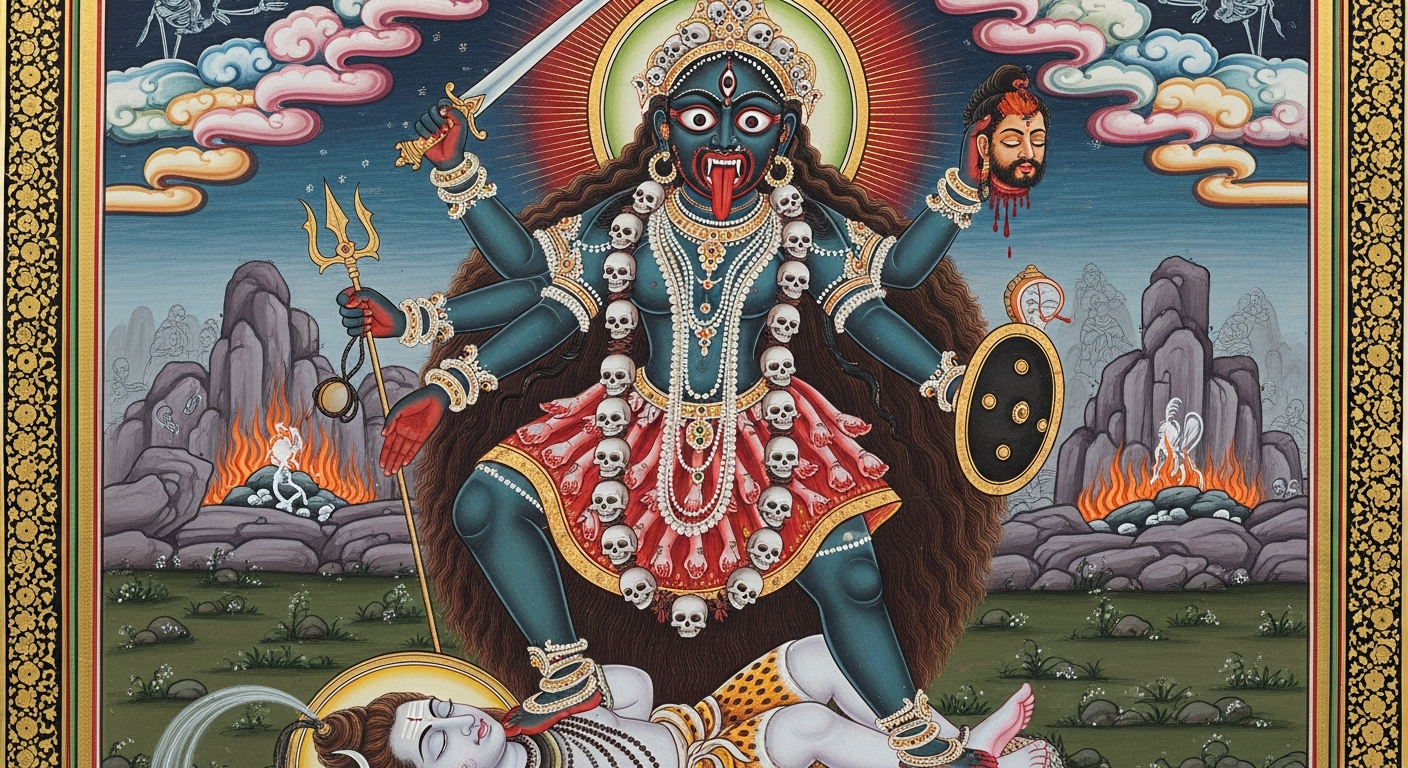
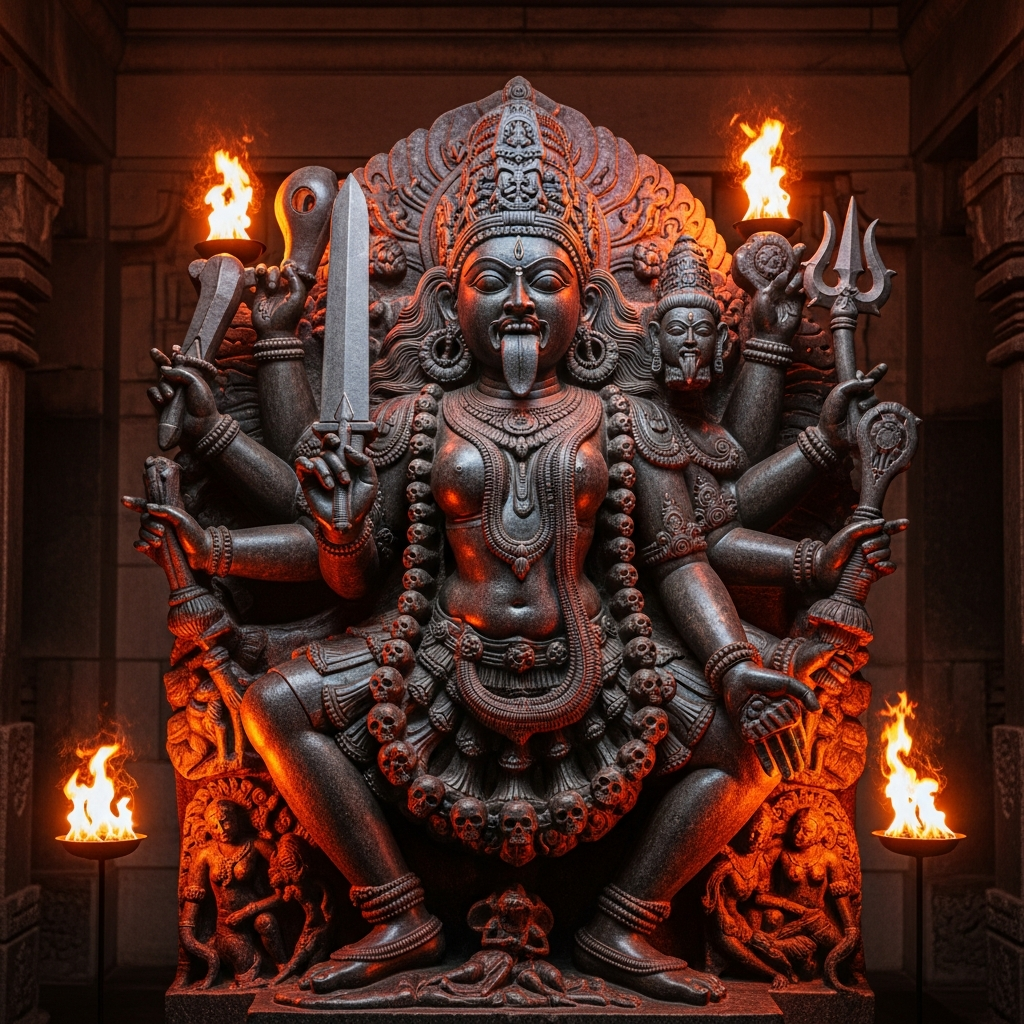
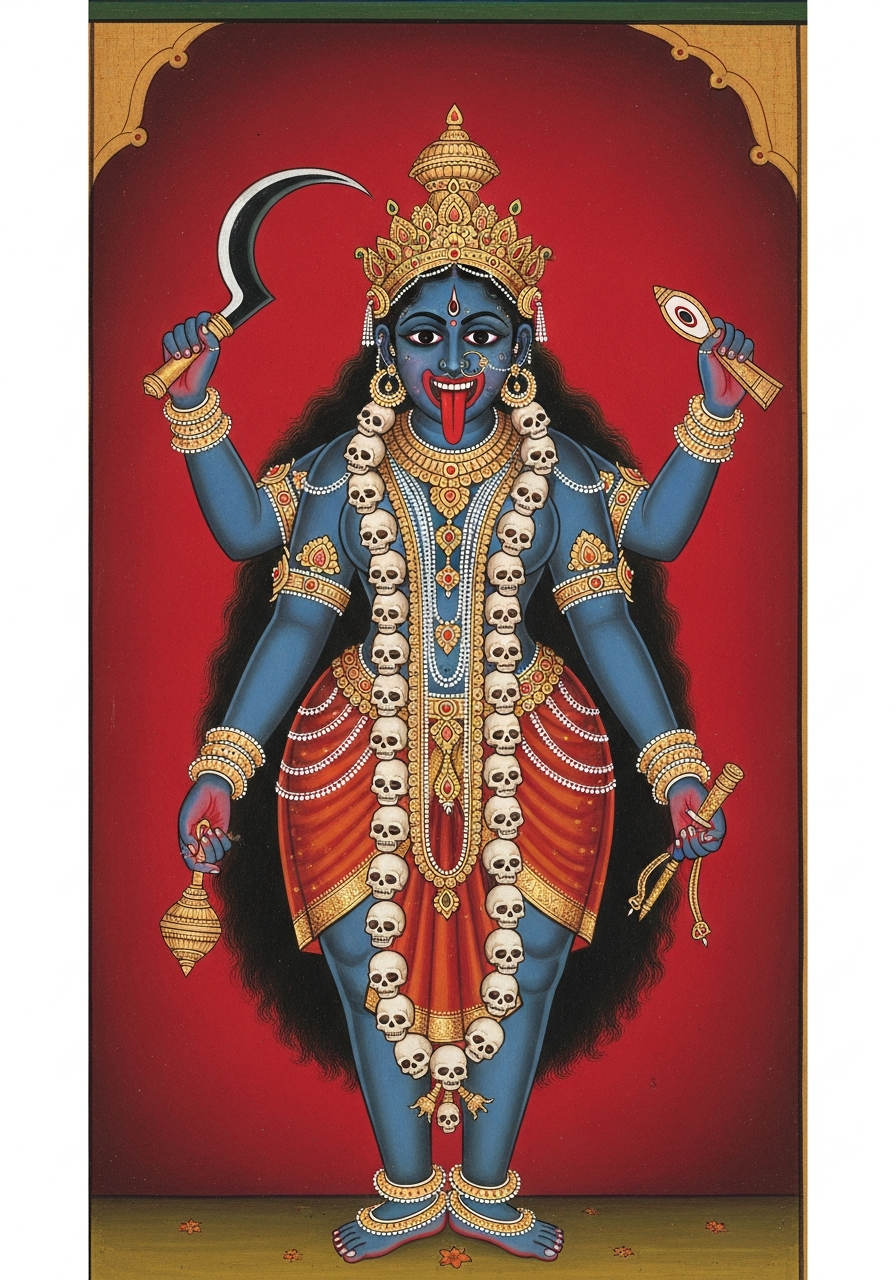
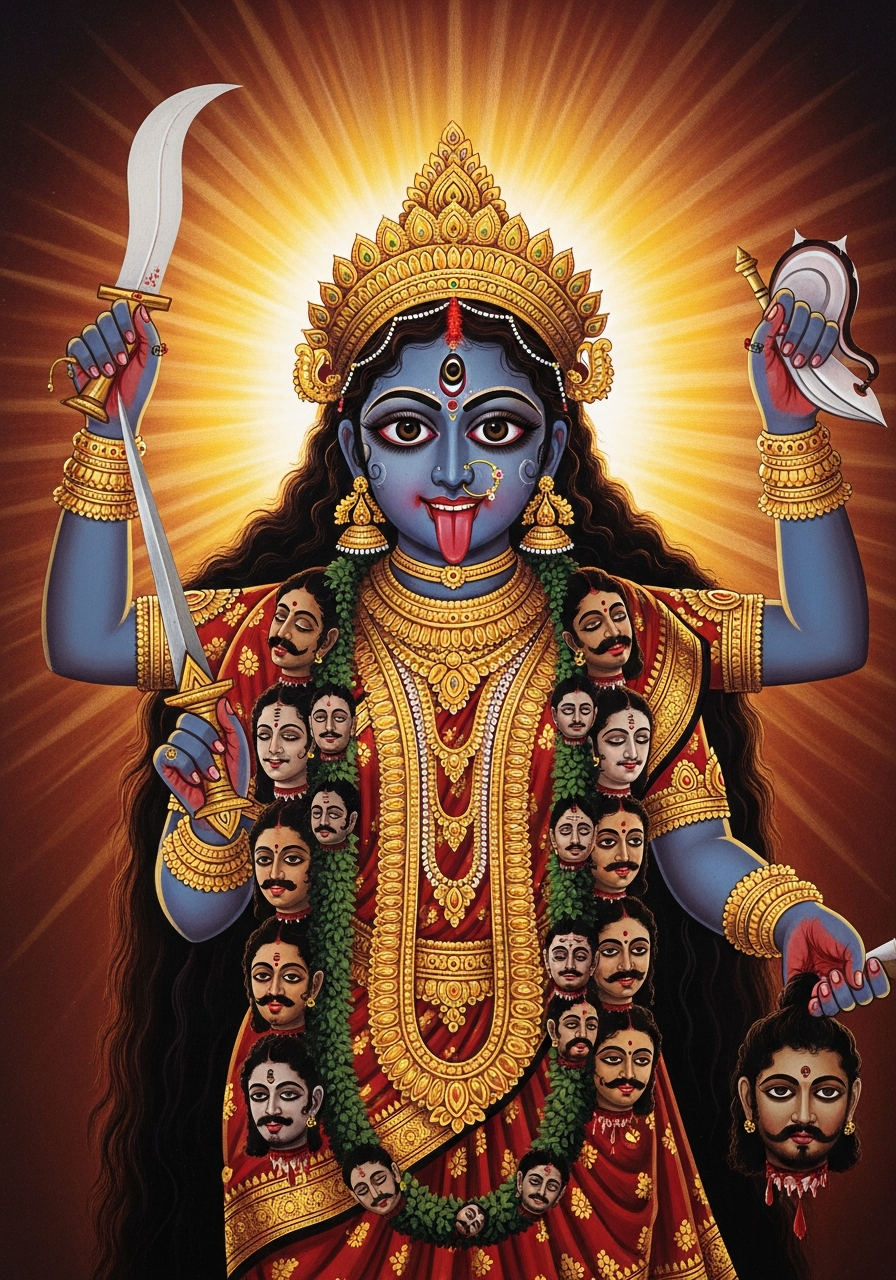
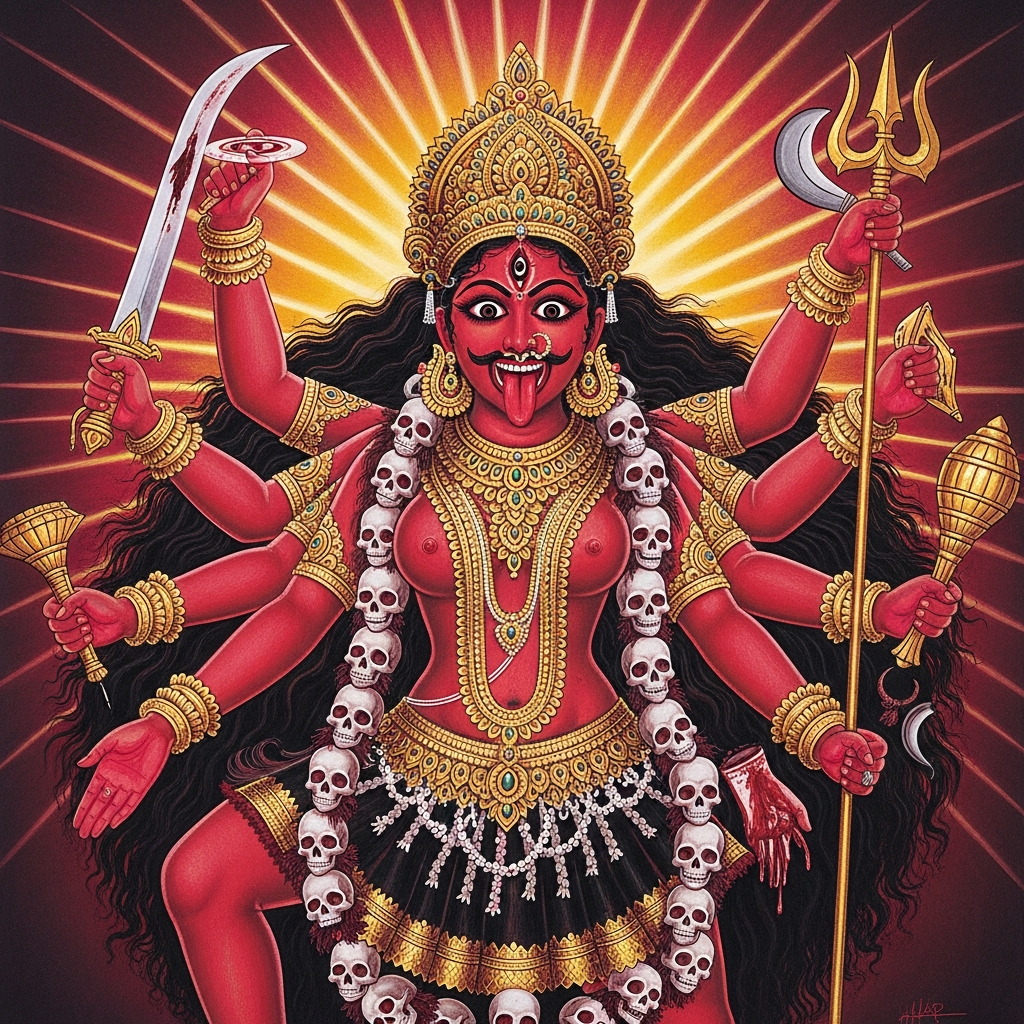
Kali's iconography is distinctive and intentionally powerful: she is depicted with dark or blue-black skin, four arms, a garland of severed heads, a skirt of severed arms, a lolling red tongue, and wild, disheveled hair. She stands or dances upon the supine body of Lord Shiva. Far from being a goddess of evil, Kali is understood in the Tantric tradition as the supreme Divine Mother — fierce because she destroys ego, illusion, and ignorance. She is the ultimate protector of her devotees.
Kali is worshipped primarily in the Bengali Hindu tradition, in Shaktism throughout South Asia, and in Tantric traditions across India, Nepal, and the Hindu diaspora worldwide. Major festivals include Kali Puja (celebrated the night of the new moon in the month of Kartik, one day after Diwali) and Navaratri.
Major Kali Temples
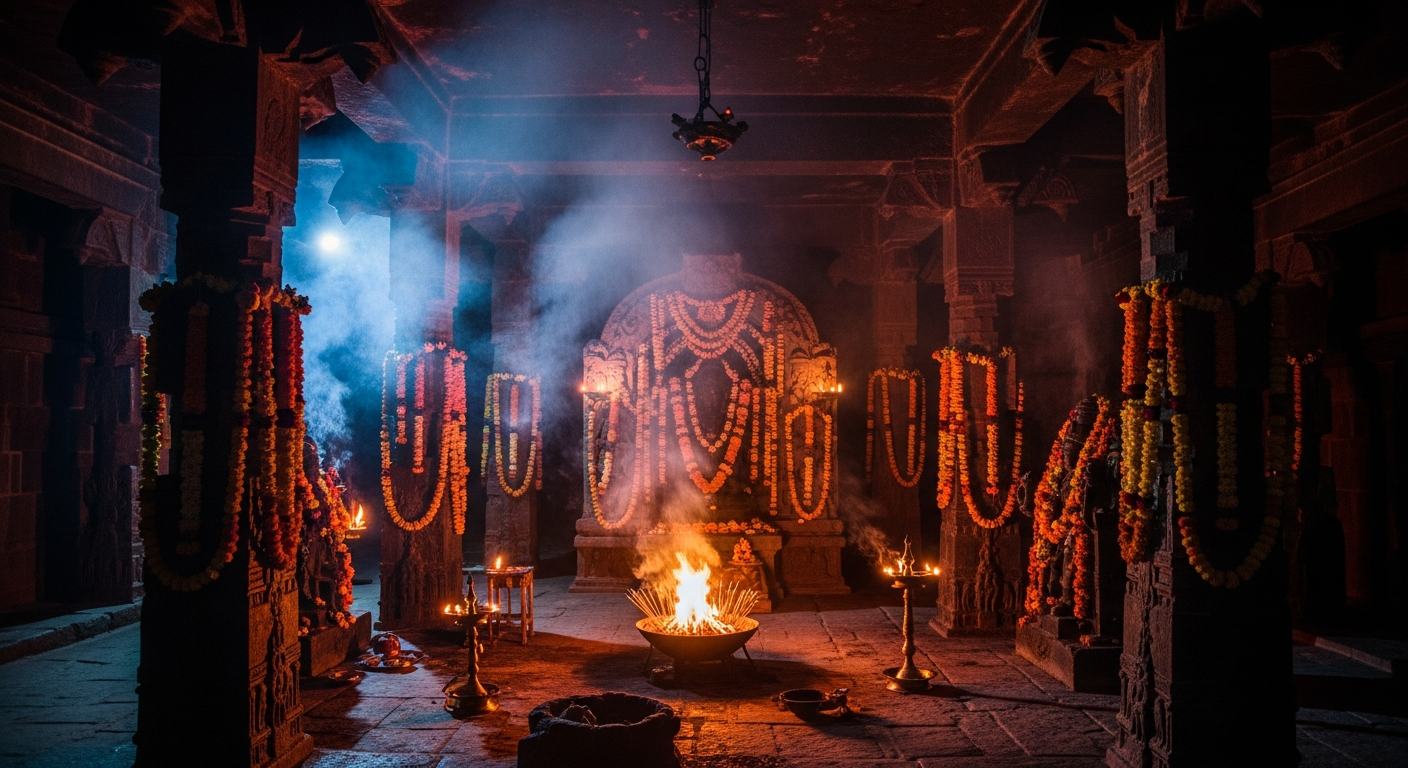
The most famous Kali temples include: Dakshineswar Kali Temple in Kolkata (associated with Ramakrishna Paramahamsa), Kalighat Kali Temple in Kolkata (one of the 51 Shakti Peethas), Tarapith Temple in West Bengal, the Bhadrakali Temple in Warangal (Telangana), Attukal Bhagavathy Temple in Thiruvananthapuram (Kerala), Kodungallur Bhagavathy Temple (Kerala), Mahakali Temple at Pavagadh (Gujarat), Dakshinkali Temple in Kathmandu (Nepal), Sri Veeramakaliamman Temple in Singapore, and Kali Mandir in Laguna Beach, California (USA).
The 108 Names of Kali (Ashtottara Shatanamavali)
The recitation of the 108 divine names of Kali — the Ashtottara Shatanamavali — is among the most potent acts of devotion in the Shakta tradition. Each name is a facet of the Goddess's infinite nature.
Kālyai — She Who Is Time / The Dark One
Kapālinyai — She Who Wears a Garland of Skulls
Kāntāyai — The Beautiful Beloved
Kāmadāyai — She Who Grants Desires
Kāmasundaryai — The Beautiful Fulfiller of Desire
Kālarātryai — She Who Is the Dark Night of Time
Kālikāyai — The Black One, She Who Is Dark
Kālabhairavapūjitāyai — She Who Is Worshipped by Kala Bhairava
Kurukullāyai — The Goddess of the Kula Tradition
Kāminyai — She Who Is Full of Divine Desire
Kamanīyasvabhāvinyai — She Whose Nature Is Enchanting
Kulināyai — She Who Is Noble of Clan
Kulakartryai — She Who Creates the Sacred Lineage
Kulavartmaprakāśinyai — She Who Illuminates the Path of the Kula
Kasturīrasanilayāyai — She Who Dwells in the Essence of Musk
Kāmyāyai — She Who Is Desirable
Kāmasvarūpinyai — She Whose Form Is Desire Itself
Kakāravarṇanilayāyai — She Who Dwells in the Sacred Letter Ka
Kāmadhenuvai — She Who Is the Wish-Fulfilling Cow
Karālikāyai — She of Terrible and Awesome Form
Kulakāntāyai — The Beloved of the Sacred Clan
Karālāsyāyai — She With a Fierce and Gaping Mouth
Kāmārtāyai — She Who Is Moved by Love for Her Devotees
Kalāvatyai — She Who Is Full of Artistic Graces
Kṛśodaryai — She Whose Waist Is Slender
Kāmākhyāyai — She Known as the Goddess of Desire (Kamakhya)
Kaumāryai — She Who Is Ever-Virgin
Kulapālinyai — Protectress of the Sacred Clan
Kulajāyai — She Who Is Born of Noble Lineage
Kulakanyāyai — The Maiden of the Sacred Lineage
Kalahāyai — She Who Is the Destroyer of Conflict and Ego
Kulapūjitāyai — She Who Is Worshipped by the Lineage
Kāmeśvaryai — Mistress of All Desire
Kāmakāntāyai — The Beloved Fulfiller of Desire
Kuñjeśvaragāminyai — She Who Moves as the Lady of Sacred Groves
Kāmadātryai — She Who Bestows All Desires
Kāmahārtryai — She Who Removes All Earthly Desires, Granting Liberation
Kṛṣṇāyai — The Dark-Complexioned One
Kapardinyai — She With Matted and Knotted Hair
Kumudāyai — She Who Delights the Earth
Kṛṣṇadehāyai — She Whose Body Is Dark as Night
Kālinḍyai — She of the Dark River Kalindi
Kulapūjitāyai — She Who Is Honored Among All Lineages
Kāśyapyai — She of the Line of the Sage Kashyapa
Kṛṣṇamātre — The Dark Mother
Kuśiśaṅgyai — She Who Bears the Sacred Kusha Grass
Kalāyai — She Who Is Art and the Digit of the Moon
Krīṃrūpāyai — She Whose Form Is the Seed Syllable Krīm
Kulagamyāyai — She Who Is Attained Through Kula Practice
Kamalāyai — She of the Lotus, the Lotus-Dwelling One
Kṛṣṇapūjitāyai — She Who Is Worshipped by the Dark Lord
Kṛśāṅgyai — She Whose Limbs Are Slender and Beautiful
Kinnaryai — She Who Is a Celestial Singer
Kartryai — She Who Is the Doer, the Creator
Kālakaṇṭhāyai — She Whose Throat Is Dark and Blue
Kārtikyai — She Who Is Associated with the Pleiades
Kambukaṇṭhyai — She Whose Neck Is Like a Sacred Conch Shell
Kaulinyai — She Who Belongs to the Kaula Tradition
Kumudāyai — She Who Is the Night Lily of the Waters
Kāmajīvinyai — She Who Gives Life Through Divine Desire
Kulastriyai — She Who Is the Highest Woman of the Lineage
Kīrtikāyai — She Who Is Fame Itself
Kṛtyāyai — She Who Is Sacred Action and Ritual Power
Kīrtyai — She Who Is Glory and Renown
Kulapālikāyai — Guardian and Protectress of the Lineage
Kāmadevakālāyai — She Who Is the Dark Night of Kamadeva
Kalpalatāyai — She Who Is the Wish-Fulfilling Vine
Kāmāṅgavardhinyai — She Who Enhances All Aspects of Desire
Kuntāyai — She Who Wields the Sacred Spear
Kumudaprītāyai — She Who Is Pleased by the Night Lotus
Kadambakusumotsukāyai — She Who Is Eager for Kadamba Blossoms
Kadambinyai — She Who Is Like Clusters of Kadamba Flowers
Kamalinyai — She Who Is Adorned with Lotuses
Kṛṣṇānandapradāyinyai — She Who Bestows the Bliss of the Dark Divine
Kumāripūjanaratāyai — She Who Delights in the Worship of Virgins
Kumārigaṇaśobhitāyai — She Who Is Adorned by the Group of Kumaris
Kumārirañjanaratāyai — She Who Delights in Pleasing the Kumaris
Kumārivratadhāriṇyai — She Who Bears the Vow of the Virgin Goddess
Kaṅkālyai — She Who Wears a Skeleton, the Skeletal One
Kamanīyāyai — She Who Is Supremely Lovable and Beautiful
Kāmaśāstraviśāradāyai — She Who Is Expert in the Kamashastra
Kapālakhaṭvāṅgadharāyai — She Who Holds the Skull and the Khatvanga Staff
Kālabhairavarūpiṇyai — She Whose Form Is That of Kala Bhairava
Koṭaryai — She Who Dwells in the Hollow, the Cave Dweller
Koṭarākṣyai — She With Deep, Cavernous Eyes
Kāśivāsinyai — She Who Dwells in Kashi (Varanasi)
Kailāsavāsinyai — She Who Dwells on Mount Kailash
Kātyāyanyai — She Who Is Katyayani, Born of the Sage Katyayana
Kāryakāryai — She Who Causes All Actions in the Universe
Kāvyaśāstrapramodinyai — She Who Delights in Poetry and Sacred Texts
Kāmākarṣaṇarūpāyai — She Whose Form Attracts All Desire
Kāmapīṭhanivāsinyai — She Who Resides in the Seat of Desire (Kamapitha)
Kaṅginyai — She Who Bears the Comb, She of the Tangled Hair
Kākīnyai — She Who Is the Kakini Shakti, Presiding Over the Heart Center
Krīḍāyai — She Who Is Divine Play, the Cosmic Sport of the Universe
Kutsitāyai — She Who Despises Evil and Condemns All Sin
Kalahapriyāyai — She Who Loves the Sacred Struggle That Leads to Liberation
Kuṇḍagolodbhavaprāṇāyai — She Whose Life Force Arises from the Sacred Fire Pit
Kauśikyai — She Who Is Kaushiki, Born from the Sheath
Kīrtivardhinyai — She Who Increases Glory and Fame
Kumbhastanyai — She Whose Breasts Nourish the Universe
Kaṭākṣāyai — She Whose Sidelong Glance Bestows Infinite Grace
Kāvyāyai — She Who Is the Essence of Sacred Poetry
Kokanadapriyāyai — She Who Loves the Red Lotus
Kāntāravāsinyai — She Who Dwells in the Forest and Wilderness
Kāntyai — She Who Is Radiant Beauty and Splendor
Kaṭhināyai — She Who Is Unyielding and Hard Against All Evil
Kṛṣṇavallabhāyai — She Who Is the Dearly Beloved Dark Consort
Kali Mantras — Complete Compendium with English Pronunciation
The Mahakali Temple mantras page presents 51 source-checked Kali mantras across 9 categories, each with Sanskrit text, English phonetic pronunciation key, meaning, and traditional purpose.
Simple Devotional Kali Mantras
Om Kalyai Namah (ohm kaal-yai nuh-muh) — Reverence to Kali. Simple devotion and surrender.Om Kalikayai Namah (ohm kaa-li-kaa-yai nuh-muh) — Reverence to Kalika. The gentlest name-mantra for daily prayer.Om Mahakalikayai Namah (ohm muh-haa-kaa-li-kaa-yai nuh-muh) — Reverence to Great Kalika, the cosmic power of time.Om Krim Kalikayai Namah (ohm kreem kaa-li-kaa-yai nuh-muh) — The Maha Mantra: salutation combined with Kali's principal seed syllable Krim, for transformation, courage and dissolution of fear.Om Shri Mahakalikayai Namah (ohm shree muh-haa-kaa-li-kaa-yai nuh-muh) — Reverence to the auspicious Great Kalika.
Dakshina Kali Mantras
Om Krim (ohm kreem) — The one-seed Kali mantra: the most compressed contemplation of transformation and fearless awareness.Om Krim Hrum Hrim (ohm kreem hrum hreem) — Three-seed mantra balancing transformation, protection and awareness.Om Krim Hrum Hrim Hum Phat (ohm kreem hrum hreem hoom p'hut) — Five-seed protective mantra for boundaries and cutting obstacles.Om Krim Kalike Svaha (ohm kreem kaa-li-kay swaa-haa) — Six-syllable direct invocation and offering to Kali.Twenty-two-syllable Dakshina Kali mantra: Om Krim Krim Krim Hum Hum Hrim Hrim Dakshine Kalike Krim Krim Krim Hum Hum Hrim Hrim Svaha — the principal Dakshina Kali invocation for transformation, protection, courage, fulfillment and liberation (traditionally teacher-guided).Bhadrakali mantra: Om Hraum Kali Mahakali Kilikile Phat Svaha — fierce but auspicious protection.Smashan Kali mantra: Aim Hrim Shrim Klim Kalike Klim Shrim Hrim Aim — the cremation-ground contemplation for facing mortality and dissolving fear.
Adya Kali Mantras from the Mahanirvana Tantra
Hrim Shrim Krim (hreem shreem kreem) — the three-seed Adya Kali mantra.Hrim Shrim Krim Parameshvari Svaha (hreem shreem kreem puh-ruh-may-shvuh-ree swaa-haa) — the ten-letter Adya Kali vidya, called a formula containing all mantras.Sixteen-letter Shodashi: Hrim Shrim Krim Parameshvari Kalike Hrim Shrim Krim Svaha (traditionally initiation-dependent).
Kali Gayatri Mantras
Adya Kali Gayatri: Om Adyayai Ca Vidmahe, Parameshvaryai Ca Dhimahi, Tan Nah Kali Prachodayat — "We contemplate the Primordial One; we meditate on the Supreme Lady; may Kali inspire our understanding."Smashanavasini–Aghora Gayatri: Om Kalikayai Ca Vidmahe, Smashanavasinyai Ca Dhimahi, Tan No Aghora Prachodayat — for confronting death anxiety and discovering fearlessness.
The Navarna (Chamunda) Mantra
Om Aim Hrim Klim Chamundayai Vicce (ohm eye-m hreem kleem chaa-moon-daa-yai vich-chay) — the root mantra of Chandi and Devi Mahatmya practice: protection, spiritual transformation and contemplation of the Goddess as creation, preservation and dissolution.
Praise Verses, Dhyana Meditations, and Kavacha Protection
The compendium also includes the Jayanti Mangala Kali verse from the Argala Stotra, the Kali Shanti Stotra opening, Dakshina Kali and cremation-ground dhyana visualization verses, Mahakali meditation from the Devi Mahatmya, and protective kavacha formulas including Om Hrim Shrim Klim Kalikayai Svaha. Each entry carries a source label distinguishing textually anchored mantras, public liturgical forms, and secondary formulas.
About Kali
Kali is one of the most powerful deities in the Hindu pantheon. She is the goddess of time (Kala), death, transformation, and liberation. Born from the brow of Goddess Durga to slay the demon Raktabija, Kali represents the ultimate reality beyond all illusion. Her fierce form — dark-skinned, tongue extended, wearing a garland of skulls — is a symbol of her power over ego and death. She stands upon the supine form of Shiva, representing the union of Shakti (active energy) and Shiva (pure consciousness).